
Peyronie’s Disease

What is Peyronie's Disease?

Peyronie’s disease, also known as penile induration (plastic induration), is a benign condition characterized by the formation of a rigid, fibrotic scar plaque (composed of excess collagen and sometimes calcified) in the tunica albuginea — the elastic membrane surrounding the corpora cavernosa of the penis responsible for erection.

During an erection, the corpora cavernosa fill with blood and expand symmetrically. However, the presence of this rigid, inelastic plaque prevents proper expansion of that segment of the penis. As a result, the penis bends and curves toward the plaque during erection, which may cause pain, significant structural deformities (such as the “hourglass” effect or indentation), and shortening of the penis.

It mainly affects men between the ages of 40 and 70. It is believed to result from an abnormal and exaggerated scarring response following repeated, imperceptible microtrauma to the erect penis during sexual activity.
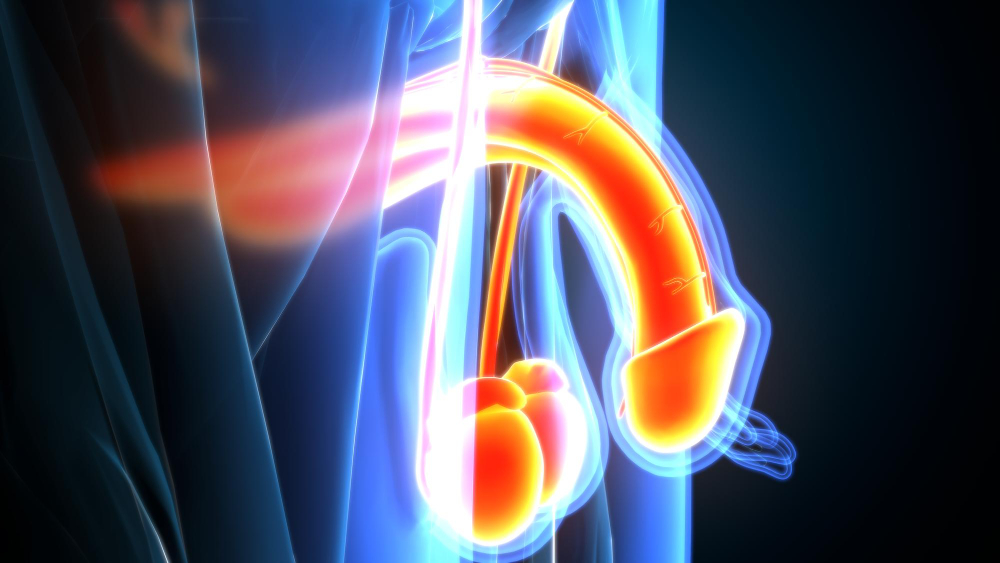
The Two Phases of the Disease and Their Symptoms

Peyronie’s disease necessarily progresses through two distinct clinical phases, and the treatment approach depends entirely on which stage the patient is in:

1. Acute Phase (Inflammatory)

This phase usually lasts between 6 and 12 months and is characterized by active inflammation in the penile tissue. The main symptoms are:

  • Penile Pain: Discomfort or pain that typically occurs during an erection or on palpation;
  • Onset of Curvature: The penis progressively starts to bend (upward, sideways, or downward) as the scar tissue forms;
  • Palpable Nodule: A lump or area of hardened tissue can be felt beneath the skin of the penis.

2. Chronic Phase (Stable)

The inflammation disappears completely and the scar plaque stabilizes (it may calcify). The symptoms change:

  • Resolution of Pain: Pain during erection resolves spontaneously in most patients;
  • Stabilization of Curvature: The angle of penile curvature becomes fixed and stops progressing;
  • Secondary Erectile Dysfunction: Difficulty achieving or maintaining rigidity due to mechanical obstruction or venous leak caused by the plaque. Severe deformity can make sexual penetration mechanically impossible, causing significant anxiety and psychological distress.
Diagnosis of Penile Curvature

Diagnosis is based on clinical andrological evaluation in the office:

  • Medical History: Determining how long the problem has been present to assess whether the disease is stable (chronic phase) or progressing (acute phase).
  • Penile Palpation: Allows the urologist to locate the plaque, estimate its extent, and assess its consistency.
  • Pharmacologically Induced Erection Test and Doppler Ultrasound: The definitive examination. It involves injecting a vasoactive substance into the base of the penis in a clinical setting to produce a temporary artificial erection. This allows the urologist to assess and measure the exact angle and direction of the curvature, detect associated deformities, and evaluate erectile vascular quality using Doppler imaging. The patient may also take photographs of the erect penis from various angles at home to assist the consultation.
Available Treatments

Peyronie’s disease does not resolve on its own, but current treatments are highly effective at controlling pain and correcting curvature.

Treatment in the Acute Phase (Preservation and Stabilization)

The goal at this stage is to relieve pain and minimize the progression of curvature; surgery is strictly prohibited during this inflammatory phase:

  • Oral Medications: Anti-inflammatories, antioxidants, or PDE5 inhibitors (tadalafil) to improve oxygenation of local tissue.
  • Penile Traction Therapy (Penile Extenders): The use of specific mechanical traction devices that stretch the penis in a controlled manner for a few hours each day. Studies show that mechanical traction during the acute phase helps reduce the final curvature angle and prevents penile shortening.
  • Intralesional Injections: Medications (such as Verapamil or corticosteroids) are injected directly into the fibrous plaque to try to break down collagen fibers and reduce local inflammation.

Treatment in the Chronic Phase (Surgical Correction)

Surgery is indicated exclusively during the stable chronic phase (at least 3 to 6 months without pain or changes in curvature) and only in patients whose deformity prevents or severely hinders normal sexual activity. There are three main approaches:

  1. Penile Plication Techniques (e.g., Nesbit Procedure / 16-Dot Technique): Indicated for **mild to moderate curvatures (generally under 60 degrees)** in men with excellent erectile function. Without touching the scar plaque, the surgeon places shortening sutures on the side opposite the curvature, immediately and mechanically straightening the penis. This technique has excellent success rates, with the only drawback being a slight shortening of the penis proportional to the degree of curvature corrected.
  2. Corporoplasty with Grafting: Reserved for **very severe curvatures (over 60 degrees)** or severe hourglass-type deformity. The urologist makes a direct incision over the rigid plaque to open or remove it, releasing the tension. The resulting gap in the wall of the corpus cavernosum is filled with a biocompatible biological or synthetic graft. This technique avoids shortening the penis but carries a higher risk of postoperative erectile dysfunction.
  3. Penile Prosthesis Implant Combined with Surgical Modeling: This is the treatment of choice for men who have both **Peyronie’s disease and moderate to severe erectile dysfunction** that does not respond to medication. In the same surgical procedure, the penile prosthesis cylinders are placed inside the corpora cavernosa (ensuring perfect rigidity and mechanically straightening the curvature), and the fibrotic plaque is incised or ruptured. It offers the highest patient satisfaction rates.
Have you noticed unusual hardening or curvature of the penis causing pain or affecting your sex life? Schedule your Urology Consultation.

Appointment booking

Book your urology appointment with Dr Frederico Furriel, a urologist with consultations in Leiria, Caldas da Rainha and Porto de Mós. Select your preferred location and submit your appointment request.