
Home » Urological Surgery and Treatments » Kidney Cancer
Kidney cancer is characterised by the malignant proliferation of cells in the renal tissues, forming a tumour. The most common type in adults is Renal Cell Carcinoma, accounting for around 90% of cases.
At an early stage, the vast majority of these tumours grow completely silently, without causing any symptoms.
Although it can occur in otherwise healthy individuals, there are factors that significantly increase the likelihood of developing kidney cancer:
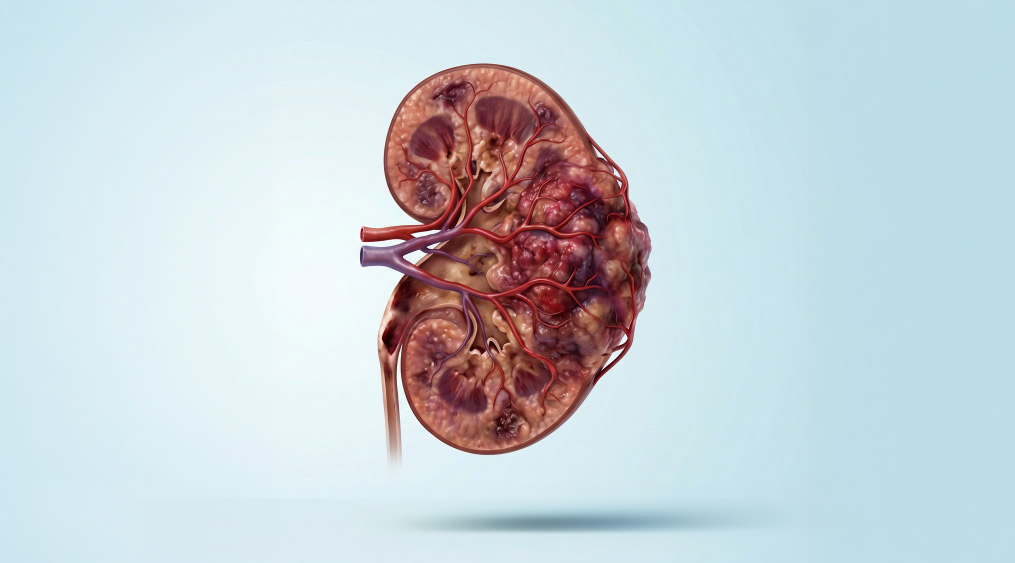
Today, the vast majority of kidney cancers are an “incidental finding”. In other words, the tumour is discovered by chance when the patient has an abdominal ultrasound or a routine CT scan for other reasons (e.g., investigating gallbladder problems or abdominal pain). When this happens, the tumour is usually diagnosed at an early stage and the potential for cure is excellent.
When the disease grows enough to cause clear clinical symptoms (locally advanced or metastatic disease), it classically presents with:
Urological assessment relies heavily on high-definition imaging tests:
Surgery remains the curative cornerstone of kidney cancer treatment. The modern goal in urological oncology is, whenever possible, to remove only the tumour and preserve as much healthy renal tissue as possible.
This is the current standard treatment for small to medium-sized tumours (generally up to 4 to 7 cm). The urologist removes only the tumour and a small safety margin around it, preserving the rest of the kidney to protect long-term renal function.
This complex surgery is preferably performed using minimally invasive approaches: Laparoscopic or Robotic. Through millimetre-sized incisions in the abdomen, excellent oncological outcomes can be achieved, with far less blood loss, rapid recovery, and minimal post-operative pain. However, there may be more complex cases in which the classic (open) approach is the most recommended.
Indicated for large tumours or those located in a way that does not allow preservation of part of the organ. It involves surgical removal of the entire kidney, the surrounding fat, and sometimes the associated adrenal gland. In the vast majority of cases, this surgery is also performed laparoscopically. It is entirely possible to live a normal, active, healthy life with only one kidney (provided it is healthy).
For older patients or those with medical conditions that make surgery risky, and in cases where renal masses are very small (less than 2 to 3 cm), modern urology may opt for Active Surveillance (monitoring the tumour with ultrasounds and intervening only if it grows rapidly) or local destruction using Cryoablation (freezing), Radiofrequency (heat), or Stereotactic Radiotherapy (radiation), generally without the need for general anaesthesia.
When the disease presents at a metastatic stage (spread beyond the kidney), targeted therapies, immunotherapy, and tyrosine kinase inhibitors have brought monumental gains in recent years in both survival and quality of life. These treatments block tumour cell function or stimulate the patient’s own immune system to actively fight them.
Book your urology appointment with Dr Frederico Furriel, a urologist with consultations in Leiria, Caldas da Rainha and Porto de Mós. Select your preferred location and submit your appointment request.