
Home » Urological Surgery and Treatments » Bladder Cancer
Bladder cancer occurs when the cells lining the inside of the bladder (the urinary mucosa) undergo genetic mutations that cause them to grow and multiply uncontrollably, forming a tumor.
The vast majority of these tumors (around 90%) originate from transitional cell carcinoma (or urothelial carcinoma), which affects the tissue that directly lines the inside of the organ. Clinically, bladder cancer is divided into two major diagnostic groups, which call for completely different treatment approaches:
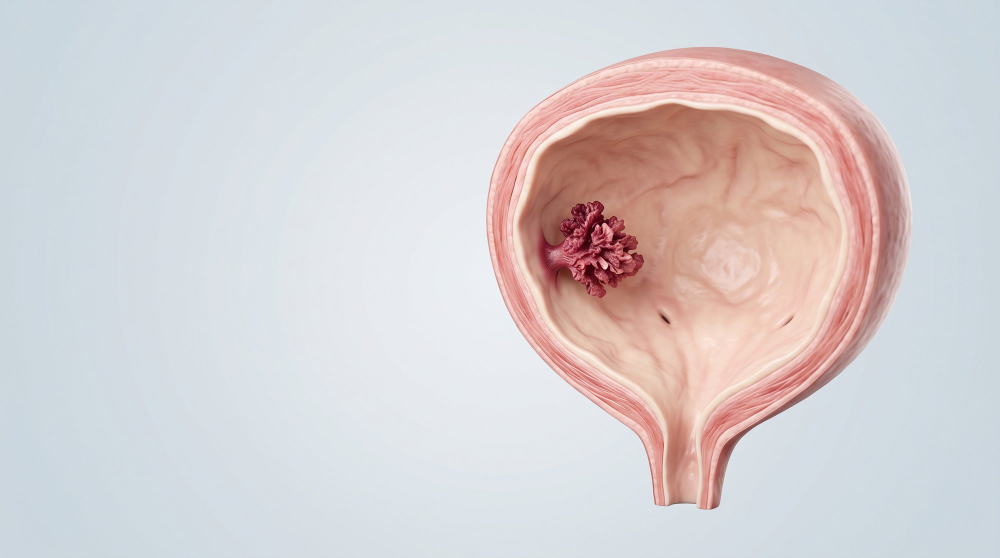
The development of this condition is strongly linked to prolonged exposure to harmful chemical substances which, after being filtered by the kidneys, become concentrated in the urine stored in the bladder. The main risk factors include:
Unlike prostate cancer, bladder cancer often becomes apparent in its early stages through visible changes in the urine.
The most common and characteristic warning sign is:
As the tumor grows or spreads, other symptoms related to irritation of the organ may appear, often mistaken for a simple urinary tract infection:
When there is clinical suspicion or the appearance of blood in the urine, urological investigation should be prompt and structured in order to rule out or confirm the presence of malignancy.
The treatment strategy depends entirely on the degree of tumor invasion into the bladder wall, as determined after testing and the initial surgical procedure.
TURBT is both the first step in treatment and an essential diagnostic tool.
In cases where the tumor has already invaded the muscle layer (muscle-invasive cancer) or when high-risk superficial tumors do not respond to intravesical treatments, the recommended surgery is complete removal of the bladder.
For patients who refuse removal surgery or who are not clinically fit to tolerate such a demanding procedure, a bladder preservation strategy may be chosen, based on combining as complete a TURBT as possible with simultaneous sessions of radiotherapy and chemotherapy (trimodal therapy). While this offers the advantage of preserving the organ, it requires extremely rigorous follow-up monitoring to detect early recurrences.
In cases where the disease has spread beyond the pelvic region, treatment relies on systemic therapies that act throughout the entire body:
Book your urology appointment with Dr Frederico Furriel, a urologist with consultations in Leiria, Caldas da Rainha and Porto de Mós. Select your preferred location and submit your appointment request.