
Urinary Incontinence

What Is Urinary Incontinence?

Urinary incontinence is defined as any involuntary loss of urine. Far from being a mere aesthetic concern or an inevitable, normal consequence of aging, it is a medical condition that profoundly affects quality of life, limiting daily activities, social interactions, exercise, and intimacy.

Bladder control depends on a complex coordination between the bladder muscle (which stores urine), the urinary sphincter (the muscular valve that closes the urinary canal), and the nervous system. When any of these components fails, involuntary leakage occurs.
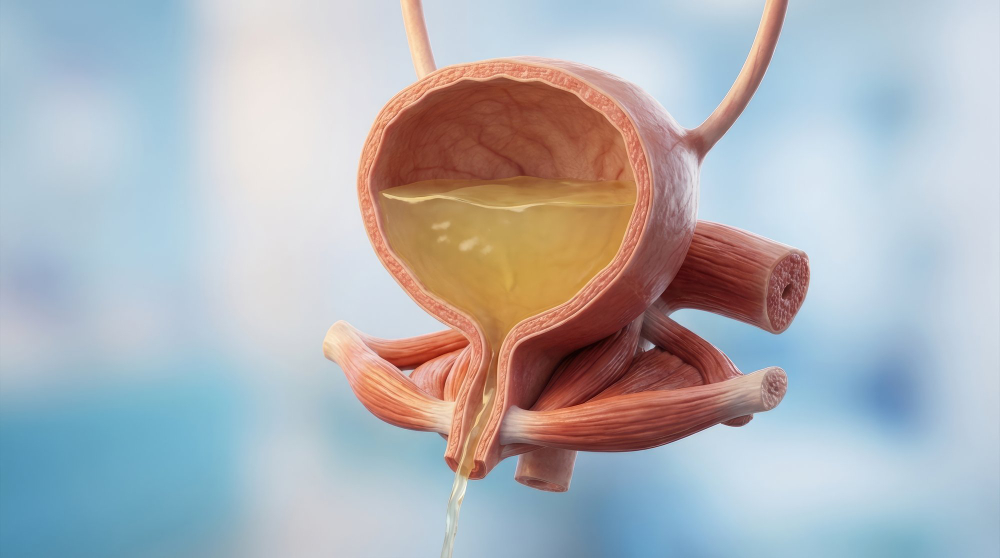
The Main Types of Urinary Incontinence

Regardless of gender, urine leakage falls into three main categories, depending on the underlying mechanism:

  1. Stress Urinary Incontinence (SUI): Occurs when urine leaks during physical activities that increase abdominal pressure — such as coughing, sneezing, laughing, lifting weights, or walking. It is usually due to weakness of the pelvic floor muscles or a failure of the sphincter to close properly.
  2. Urge Urinary Incontinence (UUI): Characterized by a sudden, intense, and overwhelming urge to urinate that the patient cannot postpone, resulting in urine loss before reaching the bathroom. It is strongly associated with Overactive Bladder, where the detrusor muscle contracts involuntarily.
  3. Mixed Urinary Incontinence (MUI): When the patient presents with symptoms of both stress and urge incontinence simultaneously.
Female Urinary Incontinence: Causes and Treatments

Urinary incontinence is significantly more common in women, affecting around 1 in every 3 women at some point in their lives.

Main Causes in Women

  • Pregnancy and Vaginal Delivery: Chronic stretching and tissue trauma during childbirth weaken the pelvic floor muscles and ligaments that support the bladder and urethra.
  • Menopause and Aging: The sharp drop in estrogen levels after menopause leads to atrophy of the urogenital tissues, reducing the urethra’s ability to close.
  • Pelvic Organ Prolapse: The “drooping” of the bladder or uterus (commonly known as a fallen bladder) alters the anatomy and function of urination.

Treatment Options for Women

The approach is progressive, starting with the least invasive techniques:

  • Lifestyle Changes: Reducing intake of bladder irritants (caffeine, alcohol) and managing weight.
  • Pelvic Floor Rehabilitation (Urogynecological Physiotherapy): Guided Kegel exercises and biofeedback to strengthen the pelvic muscles. Highly effective for mild to moderate Stress Incontinence.
  • Drug Treatment: Use of anticholinergics or beta-3 agonists (to calm Overactive Bladder contractions in Urge Incontinence).
  • Surgical Treatment (Suburethral Slings – TOT / TVT): This is the gold-standard surgery for moderate to severe Stress Incontinence. Using a minimally invasive (vaginal) approach, a small synthetic mesh tape is placed beneath the urethra. This tape acts as a “support hammock” that prevents the urethra from opening under strain, achieving cure rates above 85–90%.
Male Urinary Incontinence: Causes and Treatments

In men, urinary incontinence is less prevalent, but its causes are often directly anatomical or surgical in origin.

Main Causes in Men

  • Consequence of Prostate Surgery: The most common cause of Stress Incontinence in men is injury or weakening of the external urinary sphincter following a Radical Prostatectomy (removal of the prostate due to cancer) or, less commonly, after surgery for Benign Prostatic Hyperplasia (BPH).
  • Chronic Obstruction / Overflow Incontinence: Occurs in men with very enlarged prostates. The bladder never empties completely and becomes so full that urine continuously “overflows” in small drops.
  • Neurological Conditions: Diseases such as stroke, Parkinson’s disease, Multiple Sclerosis, or spinal cord injuries.

Treatment Options for Men

  • Treating the Obstructive Cause: In cases of overflow, clearing the obstruction by treating BPH (with medication or surgery such as TURP or Aquablation) completely resolves the problem.
  • Pelvic Physiotherapy: Targeted exercises to speed up recovery of continence after prostate surgery.
  • Male Suburethral Slings: Indicated for men with mild to moderate stress incontinence after prostatectomy. The sling gently compresses the bulbar urethra, restoring resistance to leakage.
  • Artificial Urinary Sphincter (AUS): It is considered the global gold-standard treatment for moderate to severe Stress Incontinence in men (usually following oncological prostate surgery).

It consists of a high-tech medical device fully implanted inside the body, made up of three components: an inflatable cuff placed around the urethra (keeping it closed), a small pump placed in the scrotum, and a pressure-regulating balloon in the pelvis. When the patient wants to urinate, they simply press the scrotal pump to temporarily open the urethra; after a few minutes, the device closes automatically and mechanically. It offers extraordinarily high success and patient satisfaction rates.

Specialized Diagnosis of Urinary Incontinence

A thorough urological assessment is essential to guide the correct treatment:

  • Voiding Diary: A record kept by the patient at home over 3 days, tracking fluid intake, number of urinations, and leakage episodes.
  • Renal and Bladder Ultrasound: Assesses urinary anatomy and precisely measures whether the patient retains urine in the bladder after attempting to empty it (post-void residual).
  • Urodynamic Study: This is the most comprehensive and specific test for incontinence. Using small pressure-sensitive catheters, the filling and emptying of the bladder are simulated in real time in the lab. It allows for a mathematically precise assessment of whether the leakage is due to a weak valve (sphincter) or to instability/overactivity of the bladder muscle.
Is involuntary urine loss limiting your freedom and quality of life?
Urinary incontinence can be treated. Today, we have highly effective medical, physiotherapeutic, and minimally invasive surgical solutions for both men and women.

Appointment booking

Book your urology appointment with Dr Frederico Furriel, a urologist with consultations in Leiria, Caldas da Rainha and Porto de Mós. Select your preferred location and submit your appointment request.