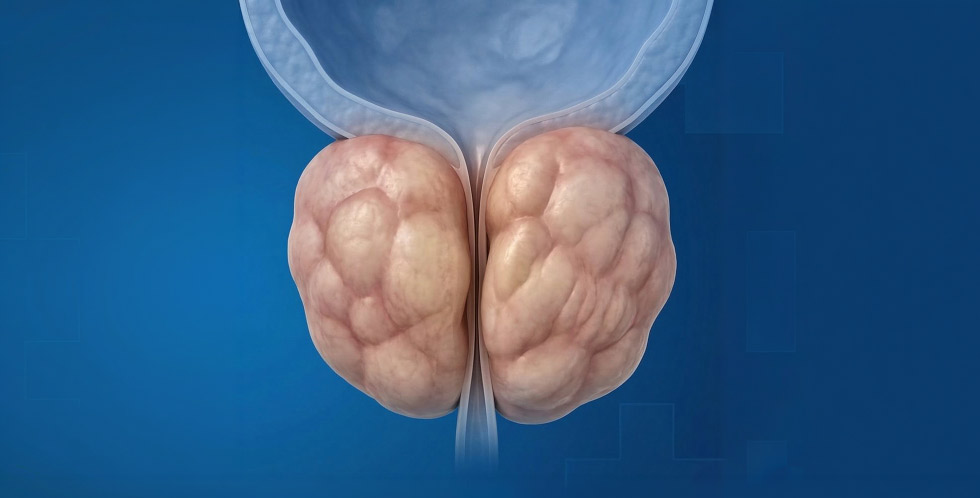
1. Lifestyle Changes and Daily Care
For men with mild to moderate symptoms, small modifications in daily habits can significantly relieve urinary discomfort and delay the need for medication:
- Fluid Control: Reduce the intake of water and other fluids 2 to 3 hours before bedtime to decrease trips to the bathroom during the night.
- Avoid Irritants: Minimize the consumption of coffee, alcohol, soft drinks, and spicy foods, as they irritate the bladder muscle and worsen urinary urgency.
- Prevent Constipation: Chronic constipation exerts physical pressure on the urethra, making urination difficult. To avoid it, maintain, for example, a diet rich in fiber.
- Physical Activity: Avoid spending many consecutive hours sitting (pelvic congestion) and practice moderate exercise, helping to control weight.
2. Medical Treatment (Pharmacotherapy)
For mild to moderate symptoms, the first line of approach is usually pharmacological:
- Alpha-blockers (e.g., tamsulosin, silodosin): Relax the muscle fibers of the bladder neck and prostate, widening the urinary canal. They offer rapid relief of urinary flow (within a few days).
- 5-alpha-reductase inhibitors (e.g., finasteride, dutasteride): Block the hormonal changes responsible for prostate growth, managing to reduce the volume of the gland by about 20-25% in the long term (6 to 12 months).
- Phosphodiesterase-5 / PDE5 inhibitors (e.g., tadalafil 5 mg daily): Act by relaxing the smooth muscle cells of the prostate and bladder, improving urinary flow. They offer the significant advantage of simultaneously treating Benign Prostatic Hyperplasia and Erectile Dysfunction, making them an excellent option for men who value the preservation of sexual function.
- Anticholinergics (e.g., solifenacin, tolterodine) and Beta-3 Agonists (e.g., mirabegron, vibegron): These are drugs specifically targeted at the bladder. They act by stabilizing the detrusor muscle (the bladder muscle), being fundamental for controlling irritative symptoms of urinary urgency, increased frequency, and incontinence.
- Combination Therapy: It is very common to associate two of these drugs (for example, an alpha-blocker with a 5-alpha-reductase inhibitor or with a beta-3 agonist) to obtain a synergistic effect: clearing the canal and, at the same time, calming bladder urgency.
3. Surgical Techniques and Laser Approaches (Endoscopic)
When medications are no longer effective or complications arise, the removal of obstructive prostatic tissue (adenoma) is chosen, keeping the outer capsule of the prostate intact. Thanks to technology, today this process is often done without skin incisions.
- Transurethral Resection of the Prostate (Bipolar TURP): This is the evolution of classic standard surgery. Through the urethra, the surgeon uses electrical energy to cut the excess obstructive tissue into small fragments. It is indicated primarily for small to moderate-sized prostates.
- Photoselective Vaporization with Greenlight Laser: This technique uses a high-precision green laser that is specifically absorbed by the blood in the prostate tissue. Instead of cutting, the Greenlight vaporizes the obstructive tissue and simultaneously cauterizes the blood vessels. This translates into virtually zero risk of bleeding, making it the ideal treatment for cardiac patients or those taking anticoagulant and antiplatelet medications. The hospitalization time and the use of a catheter are drastically reduced.
- Holmium Laser Enucleation of the Prostate (HoLEP / ThuLEP): Performed endoscopically, it uses a high-power laser to detach and remove the adenoma completely, as if separating the segments from the inside of an orange. It is a highly effective technique, recommended for large-volume prostates, offering a very fast recovery.
4. Next-Generation Autonomous Robotic Procedures (MIST)
These options aim to clear the urinary canal while maximizing safety and preserving the patient’s quality of life.
- Aquablation (Robotic-Guided Waterjet Ablation): This is one of the greatest innovations in modern urology. It is a minimally invasive procedure that combines real-time ultrasound mapping with the precision of an autonomous robotic arm. The surgeon draws the exact area to be removed on the console, and the robot uses a high-speed waterjet (without heat) to sculpt and remove the obstructive tissue. By avoiding thermal energy, Aquablation offers an exceptionally high rate of preservation of sexual function and normal ejaculation, with high efficacy.
- Rezum System (Water Vapor Therapy): Indicated for quick interventions in an outpatient setting or with a very short hospital stay. It consists of injecting water vapor directly into the obstructive tissue through a special needle via an endoscopic route. The vapor destroys the cells of the prostatic adenoma, which are progressively reabsorbed by the body over the weeks, freeing the urinary canal.
5. Minimally Invasive Surgery for Large Volume Prostates (Simple Prostatectomy)
When the prostate reaches very high volumes (generally above 80-100 cc), conventional endoscopic surgery may not be the ideal approach. Currently, classic open surgery (which required a large incision in the abdomen and long hospital stays) is being progressively replaced with great success by minimally invasive routes:
- Laparoscopic and Robotic Simple Prostatectomy: Through small holes in the abdominal wall (often enhanced by the millimeter precision and 3D vision of robotic surgery), the urologist can access the prostate and remove the entire large adenoma in a controlled manner.
- Advantages: This approach offers the excellent success rates of classic surgery, but with drastically lower blood loss, much less postoperative pain, almost imperceptible scars, shorter hospital stays, and a much faster return to active and professional life.